Natural Environment Training (NET) teaches skills during play and everyday routines. Discrete Trial Instruction (DTI), also called discrete trial training, uses short, planned opportunities to practice a specific skill. The right approach depends on the child, the goal, and where the child needs to use the skill.
What Is Discrete Trial Instruction (DTI)?
DTI breaks a skill into manageable steps. In each planned opportunity, the therapist shows what to do or gives a short instruction, gives the child time to respond, and offers feedback or help. Repeating a planned activity can help the team see how much support the child needs.
What Is Natural Environment Training (NET)?
NET gives a child a chance to practice a skill during an activity they’re already doing. The therapist uses the child’s interests and the situation to decide when to offer help and how to track progress.
One goal, two ways to practice
- During a planned activity: A therapist sets up several short turns opening containers of art supplies. If a lid is hard to open, the therapist gives the child time to ask for help using speech, a sign, or a communication device and helps open it.
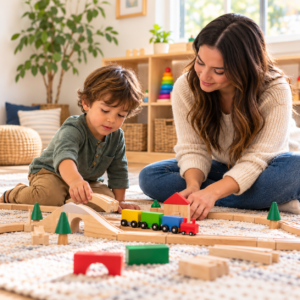
- During play: A piece of the child’s train track gets stuck. The therapist notices the need for help, gives the child a chance to ask in their usual way, and helps free the piece so play can continue.
Play and rest can also be valuable on their own. When a therapist uses play as a teaching opportunity, they should be able to explain the goal and how they’ll know whether the child is making progress.
What to ask your ABA team
1. What skill are we working on?
Ask how the teaching approach matches a goal that matters to your child.
2. What will practice look like?
Ask for an example of how the therapist will make practice meaningful and adjust when your child needs support.
3. How will we know it’s helping?
Ask how the team will track the skill and check whether your child can use it in everyday situations.
4. How can caregivers help?
Share how your child uses the skill at home. If you want to practice it together, ask for one idea that fits a routine you already have.
New to ABA? Start with our guide to how ABA works. If your child is already in therapy, see what progress can look like.